

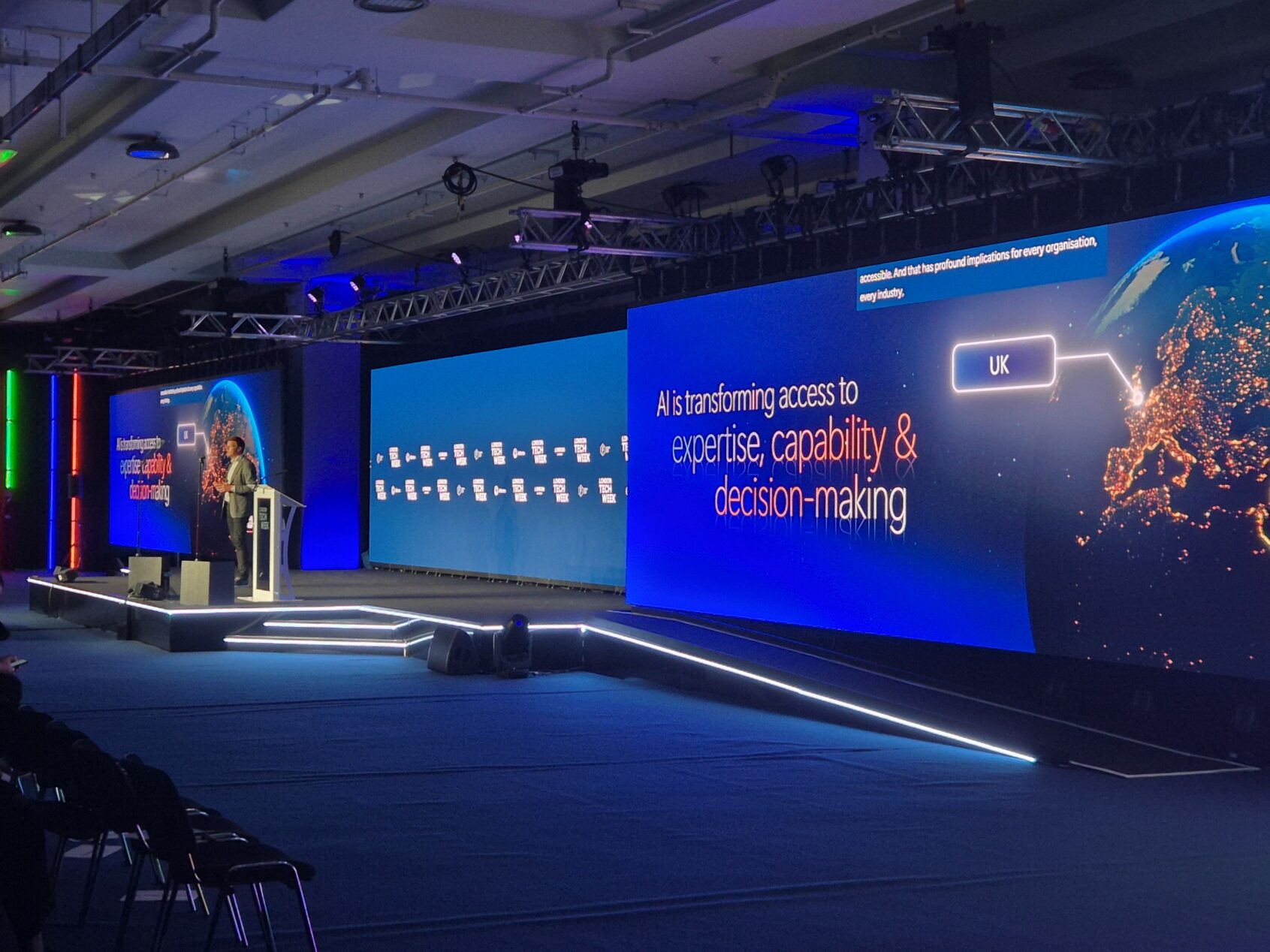
London Tech Week 2026: ‘The UK can lead in the AI era’
“This moment is about far more than technology. It’s about the kind of country we want to build together.” That was the message from Darren Hardman, CEO of Microsoft UK and Ireland, as he addressed London Tech Week and set out a challenge for business, government and educators: move quickly, build skills and make sure the benefits of AI reach all people across the country.
The event, running from 8-12 June at Olympia, London and across the capital, brings together innovators, policymakers and technology leaders from around the world. This year, AI sits clearly at the centre of the agenda, as a force already changing how people work, learn, build companies and deliver public services.
Prime Minister Sir Keir Starmer opened the event by framing AI as a national opportunity that must reach every part of the UK. He pointed to Warrington in Cheshire, where a former Unilever soap factory has been transformed into an AI datacentre, as an example of how new investment can bring skilled jobs and fresh purpose to former industrial communities.
His argument was that Britain should shape the AI revolution, not simply respond to it. That means, he said, backing companies, investing in skills, protecting people from harm and ensuring the technology improves everyone’s lives: the many, not just the few. Backing this up. the PM announced a £400 million commitment to buy specialist AI chips to aid UK start-ups.
Mayor of London Sir Sadiq Khan, Londonmaxxing [his own coinage], made the case for the capital as a place where innovation should serve the public good as well as private ambition. He highlighted London’s talent, culture and openness, while announcing a £12 million programme to help its SMEs adopt AI.
Hardman’s speech picked up those themes and turned them towards what AI is already doing inside organisations, and how we turn initial impetus into lasting advantage.
Expanding our roles
He began with a familiar problem: “The constant flow of meetings, messages and information competing for my attention, too little time for thinking, creating and deciding.”
AI, he argued, is starting to solve that problem by not just helping people work faster, but also expanding what they’re capable of doing. AI, he said, is now democratising intelligence.
Capabilities have been locked inside specialist roles, he argued. AI can help people cross those boundaries. A scientist can prototype an app without being a developer. A teacher can build personalised learning materials without production skills. A colleague close to a problem can create a tool to fix it.
“AI does not replace expertise,” Hardman said. “It diffuses it more widely across organisations and society.”
From tools to collaborators
Hardman described a shift from “information work” to “intelligence work”, where people increasingly guide, check and manage AI-enabled tasks rather than doing everything themselves.
Microsoft’s latest Work Trend Index, he said, found that half of employees are producing work they could not have produced a year ago. That shift is pushing organisations to think differently about roles, skills and leadership.
“If you give people the right tools, they’ll surprise you with what’s possible“
Experimentation at companies isn’t enough, though, he noted. Leaders need trusted platforms that connect data, security, workflows, agents and people responsibly, especially as employees are already bringing AI into work whether their organisations are ready or not.
“The challenge for leaders is to move quickly to manage it responsibly, helping people use it safely and effectively,” Hardman said.
AI already at work
Hardman pointed to examples across the UK where AI is already making a deep impact.
HSBC is using AI agents to help customer service teams handle complex requests. Since January 2025, customer resolution times have fallen by nearly a third. The bank also uses GitHub Copilot across 39,000 developers globally, with 87% actively using it.
Lloyds Banking Group has embedded AI across 40,000 colleagues, combining Copilot and agents in a secure platform. Vodafone is using AI in customer care, legal work, network engineering, software development and retail operations, with 94% of employees saying Copilot has improved their productivity.
In engineering, London start-up PhysicsX is using AI to compress complex design and simulation work from months into seconds.

Hardman also turned to public services. NHS England is expanding access to Microsoft Copilot to more than 500,000 clinicians and support staff, following a trial in which 30,000 users saved 43 minutes a day on administration.
He highlighted Dragon Copilot, Microsoft’s AI-powered clinical assistant, which transcribes consultations and drafts notes for clinicians to review.
“Less admin, more eye contact, more listening, more time focused on the patient,” he said.
Skills for the AI economy
Hardman said that the demand for digital and AI skills is rising across every sector, and that more people need upskilling.
Microsoft, he said, had provided free AI training to more than 1.5 million people in the UK over the past year, and is working with government through TechFirst and other programmes to reach millions more.
“AI skills are no longer just an input to growth; they are a licence to participate,” Hardman said.
That participation is happening. NHS staff join weekly Copilot cafes to share prompts, ideas and AI agents. At law firm Shoosmiths, one of the strongest examples came from an executive assistant who joined the business 28 years ago and used Copilot’s no-code Agent Builder to build a bespoke agent for a major high-street retail client.
“If you give people the right tools, they’ll surprise you with what is possible,” Hardman said.
Seizing the moment
He closed with a question that ran through the opening speeches: what kind of country does the UK want to build with AI?
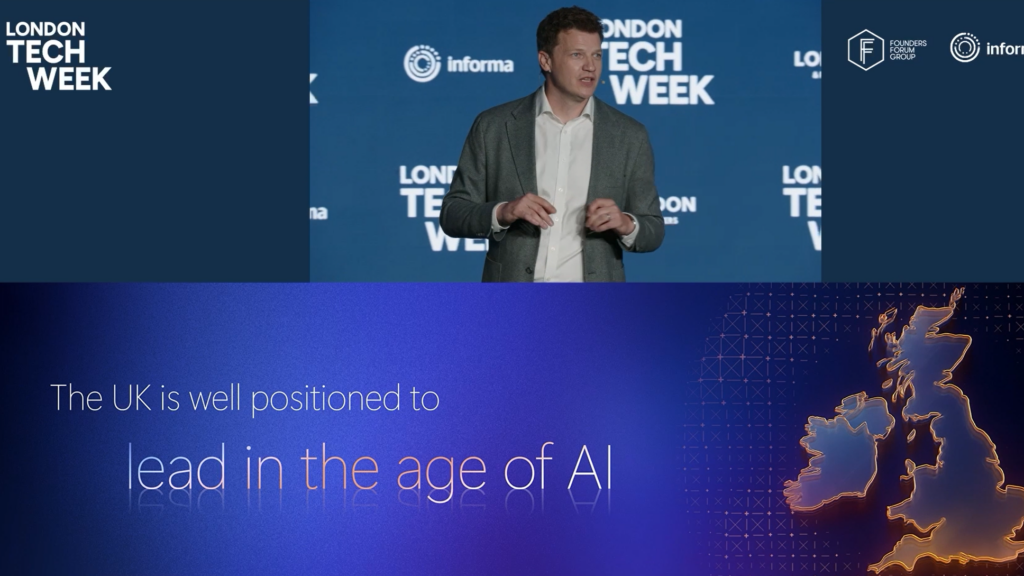
His answer was hopeful. The UK has talented people, world-class universities, ambitious businesses and public servants already using AI to work smarter. The task now is to move faster, invest in skills and make sure the opportunity reaches further.
“The UK can lead in the AI era,” he said, “Boldly, optimistically and starting right now.”