

Bearing fruit: Helping those who help others through the power of AI
Many charities want to use AI but lack time, confidence and clear guidance. In 2025, two Microsoft-backed programmes – Ai123 and the Charity AI Leadership Accelerator – helped introduce charities to AI in a safe and practical way.
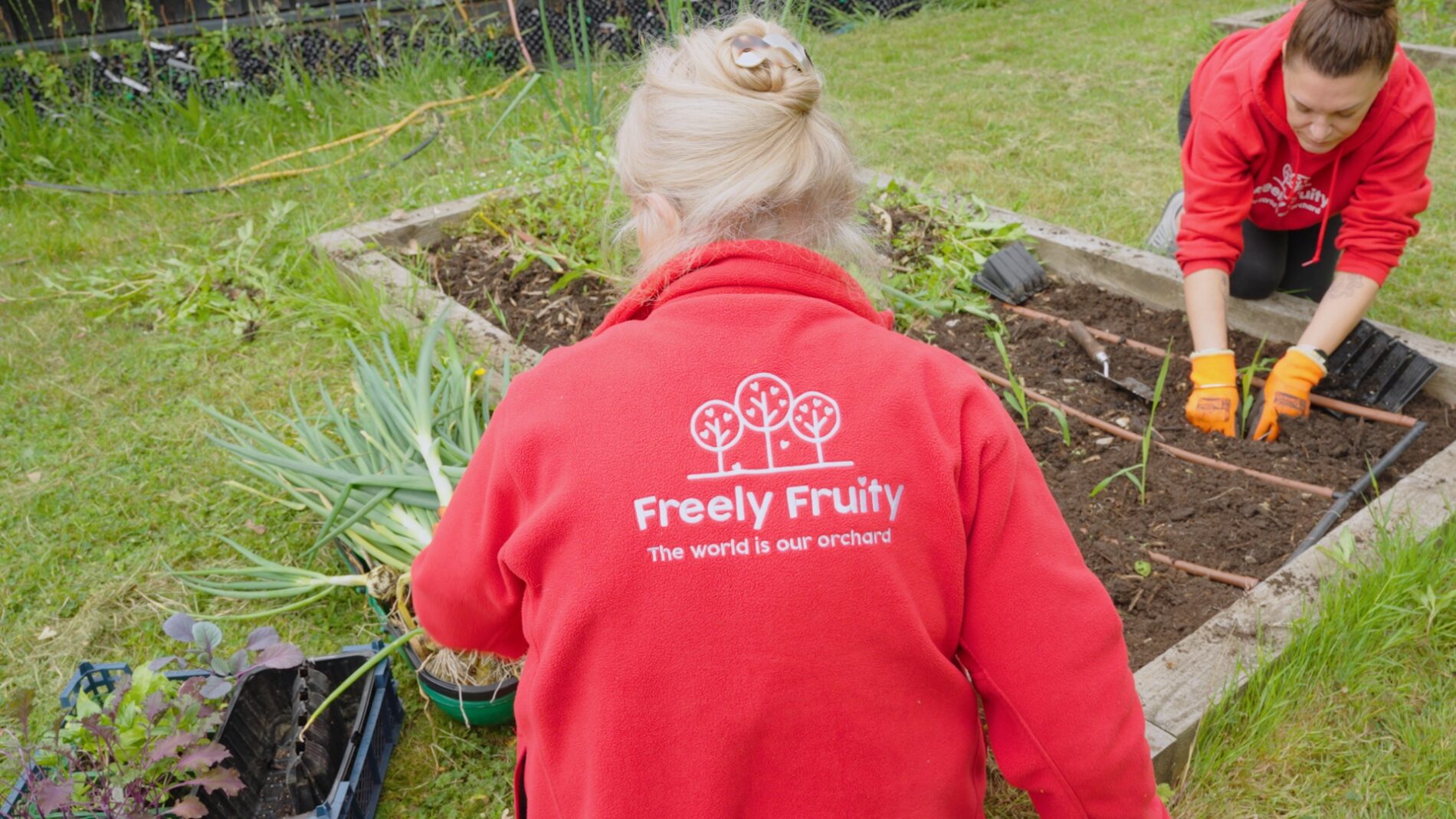
Freely Fruity is a small charity which plants fruit trees and bushes in local environments then donates the produce to food banks.
It has been given free help from Microsoft volunteers on how to use AI, and these newly learned skills have had a profound impact, says co-founder Matt Knight.
“AI has been instrumental in freeing up my time,” he says. “I can get so many more tasks done now that previously would take me hours on end.
“This now frees me up to concentrate on our core business, which is expanding our charity.”
The challenge
But the Charity Digital Skills Report 2025 – the annual barometer of digital and AI trends across the sector – found that despite strong interest in using AI for everyday work, lack of confidence and leadership is holding many charitable and non-profit organisations back from making the most of the technology.
There are more than 170,000 charities registered with the Charity Commission for England and Wales, and although most charities say they use AI in some way, many leaders are unsure how to plan for it or implement it properly.
Since smaller charities often have little time and money, even taking the first steps can feel daunting for many.
“Charities play an increasingly critical role in our society supporting those most in need but are under increasing pressure to deliver services to their beneficiaries with increasing costs and funding challenges,” says Charles Eales, Microsoft UK’s AI National Skills Director.
“AI has the potential to be a gamechanger for the charity sector but only if they have both the tools and the skills to be able to maximise its opportunity.”
Meeting the need
Propelled by its belief that technology should be a force for good, Microsoft has worked with sector partners on two complementary offers aimed at the charity sector:
1. Ai123: Created by Neighbourly with support from Microsoft, Ai123 helps small charities and community organisations with an accessible route to AI skills and responsible use.
2. The Charity AI Leadership Accelerator: Developed by Zoe Amar Digital and funded by Microsoft, helps leaders and trustees set policy and governance, plan change, and scale up what works.
Both programmes were developed in consultation with charities and designed to address the knowledge gaps and challenges they faced.
‘Learn, use, pass it on’
Neighbourly’s Ai123 campaign aimed at charities, community organisations, and individual volunteers, involves a free one‑hour webinar in plain English that introduces AI basics and safe, responsible use. Participants receive interactive tools, lesson‑plan templates and a digital certificate.
The philosophy is “learn – use – pass it on”.
Since launch, Ai123 has trained more than 61,000 people as of July 2025. Thanks to the ‘train the trainer’ approach, charity leaders are passing their learning on to 14 people each on average. More than 4,000 charities have participated, potentially benefiting up to 1.5 million people through improved efficiency and service delivery, the charity estimates.
In addition, corporate volunteers offer one‑to‑one support, helping charities apply tips straightaway, such as how to use generative AI to tidy up case notes or improve social posts and newsletters, for example.
“The training completely blew us away,” said Bristol-based charity, Empowering Futures. “The amount of administration work we will be able to do in minutes instead of hours is astounding.
“So pleased and amazed.”
Leading from the front
While Ai123 helps people get going with AI, the Charity AI Leadership Accelerator helps leaders lead. Over four 90‑minute online sessions in May and June 2025, trustees and senior teams learned how to drive AI implementation ethically, safely and effectively.
Smaller charities focused on keeping things simple by using easy-to-follow checklists, basic rules for handling data, and clear steps showing when not to use AI, so they could get quick and practical results.
Larger charities concentrated on organisation‑wide co-ordination: agreeing who is responsible for what, setting approval routes for new AI use, and ensuring experimental learnings are shared.
“We’re helping charities adopt AI safely and responsibly and take advantage of this ground-breaking technology“
The Accelerator supported 100 leaders across four cohorts, and in the evaluation, 94.1% reported a confidence lift and 82.4% rated it ‘excellent’.
“We’ve already started shaping our approach for the new business year, drawing on the learnings from these sessions. We’ve also started looking at how we build AI into our policies,” said one large-charity Accelerator participant.
“It has really opened my eyes to AI and how we can be using it effectively to aid us in everyday life – invaluable training,” said another.
Equipped with new skills, charities are now using entry‑level AI tools to draft grant applications and emails faster, improve consistency in their communications, and reduce admin – freeing up time to do more of the work they really want to do.
Skills commitment
Underpinning these initiatives is Microsoft’s wider commitment to give people free AI skills so that everyone can benefit in the era of agentic AI. The company has already surpassed its target to give AI skills to a million people by the end of 2025 – the current figure stands at more than 1.3 million.
Microsoft has achieved this through collaboration with partners across business, education and the non-profit sector.
“I’m proud of our work with Neighbourly and the Charity AI Leadership Accelerator,” says Eales. “We’re helping charities adopt AI safely and responsibly and take advantage of this ground-breaking technology, helping them operate more efficiently and give their beneficiaries a better service.”
Resources
Teams looking to take a first step into AI can join Ai123 via Neighbourly’s resource hub AI123 Sign Up – Free AI Training by Neighbourly & Microsoft).
The Charity AI Leadership Accelerator offers short, accessible videos: AI for charities – YouTube.
For broader support, Microsoft for Nonprofits provides grants, discounts and skilling tailored to charities, including entry‑level AI learning paths on Microsoft Learn.
This work contributes to a wider UK effort alongside partners across business, education and civil society to expand access to AI skills on a scale. When the first step is simple, safe and useful, confidence grows and that’s when communities feel the difference.