

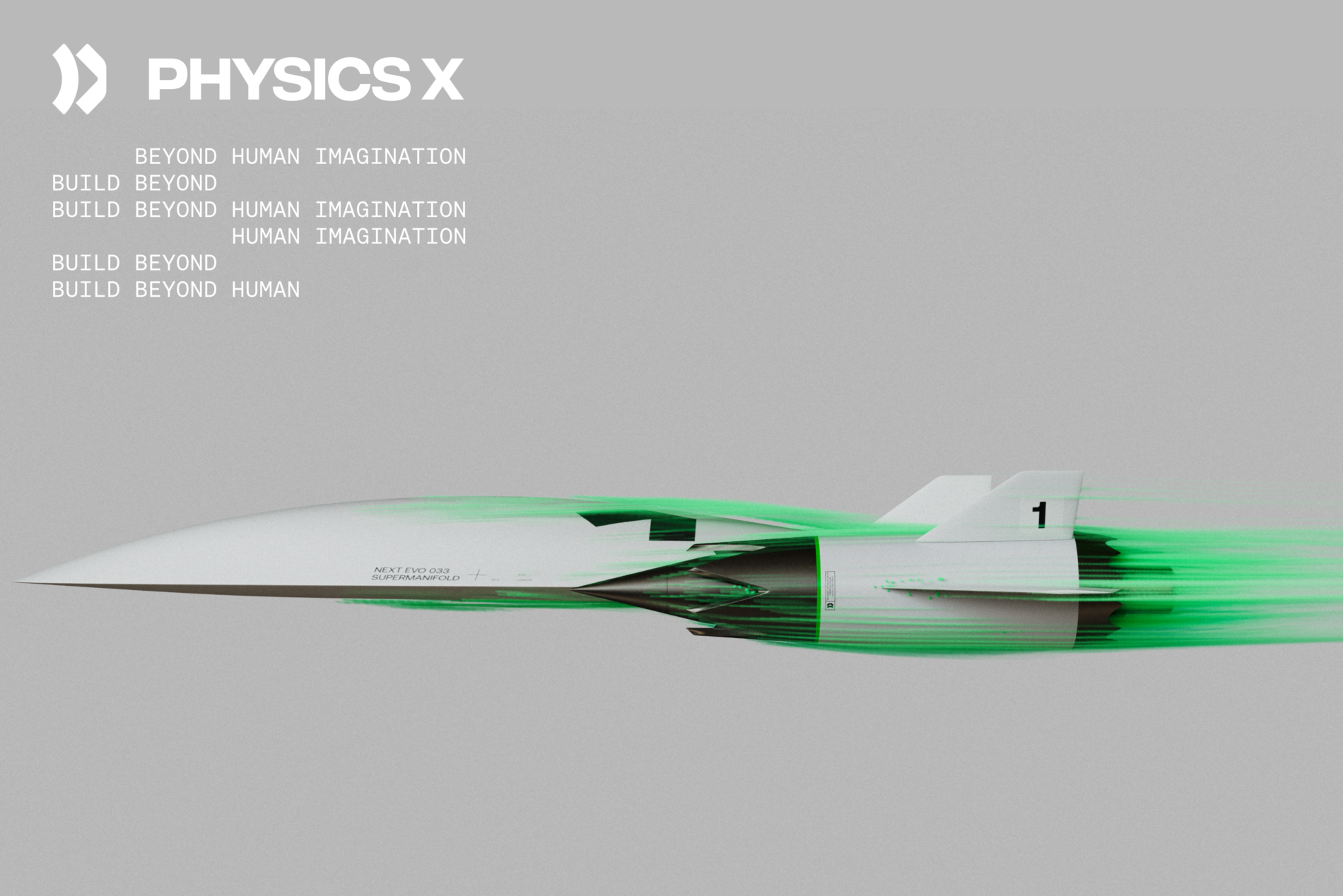
‘From months to seconds’: How PhysicsX is transforming engineering with physics AI
PhysicsX, the fast-growing London-based tech company founded by former F1 engineers and AI researchers, is helping reshape the physical world faster than ever before through its pioneering application of physics AI.
For as long as engineering has existed, progress has been limited by the speed with which ideas can be tested, refined, and improved.
For the Wright brothers, each design iteration of their prototype flying machine took roughly a year: build, test, fail, learn, repeat.
With the advent of digital prototypes and simulation, that cycle shrank from years to weeks.
Now PhysicsX is shrinking those timescales even further with its AI-native platform that enables massive acceleration and optimisation across the full engineering lifecycle, in industries such as aerospace, semiconductors, automotive, materials, and energy.

“We’re integrating physics AI directly into engineering workflows, turning processes that used to take days into something that can happen almost instantly,” explains Garazi Gómez de Segura, Senior Principal Data Scientist at PhysicsX.
From frontier research to real-world impact
The company has worked with several businesses across advanced industries to compress design cycles, maximise performance, cut costs and enable deep, system-level optimisation.
“For example, in semiconductor manufacturing, we are helping significantly reduce the time required to develop new equipment prototypes,” says Mark Huntington, Managing Director North America at PhysicsX.
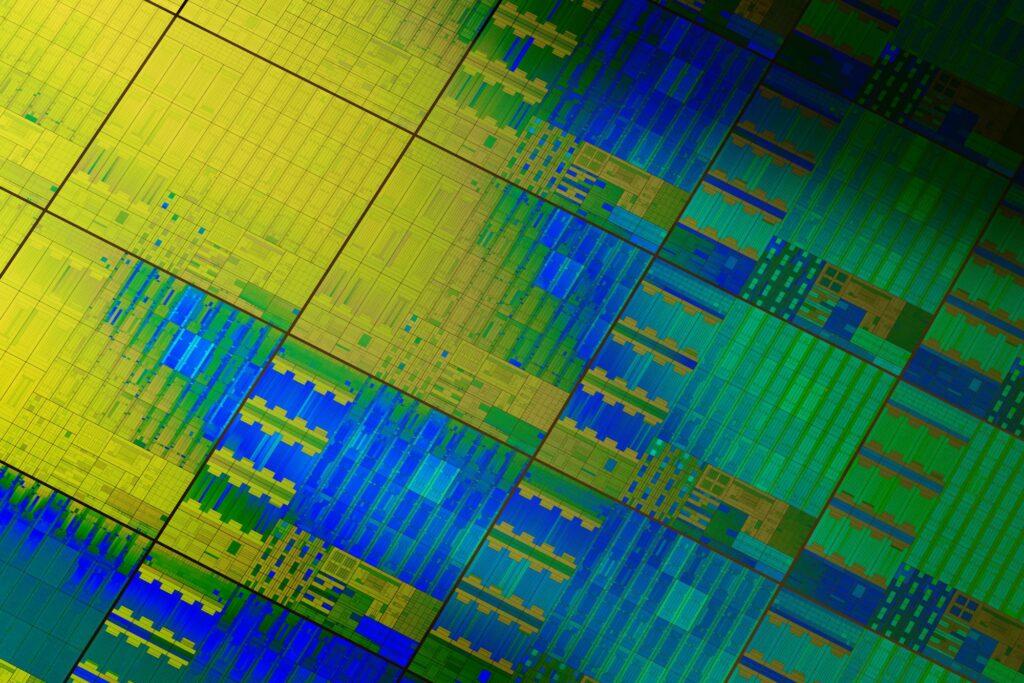
“This unlocks faster innovation in one of the world’s most strategically important industries.”
PhysicsX has also applied the same approach to improve thermal behaviour in Microsoft Surface devices, enabling engineers to test many more design variations of the cooling fan.
And in mining and metals, the company is working with a global leader to improve the efficiency of copper extraction – a critical material for electrification, renewable energy, and AI-powered datacentres.
“We want to bring the next 100 years of engineering progress into the next 10“
Traditional extraction methods recover around 40% of usable material from the mined ore. By applying AI-driven optimisation, PhysicsX aims to increase the recovery rate significantly – potentially up to 80% – improving access to a material essential for the energy transition.
“Every electric motor, generator, and data centre relies on copper,” explains Huntington. “If supply becomes constrained, the knock-on effects ripple through the entire energy system.”
Towards ‘imagineering’
As physics AI can evaluate new designs faster than human engineers can conceive them, innovation is no longer constrained by analysis or simulation, but only by the limits of human imagination.
“When evaluation time drops to seconds, the main question becomes what should we optimise for?” says Benjamin Levy, Principal Data Scientist at PhysicsX.
“Engineers can explore thousands of trade-offs in parallel and arrive at better system-level solutions.”
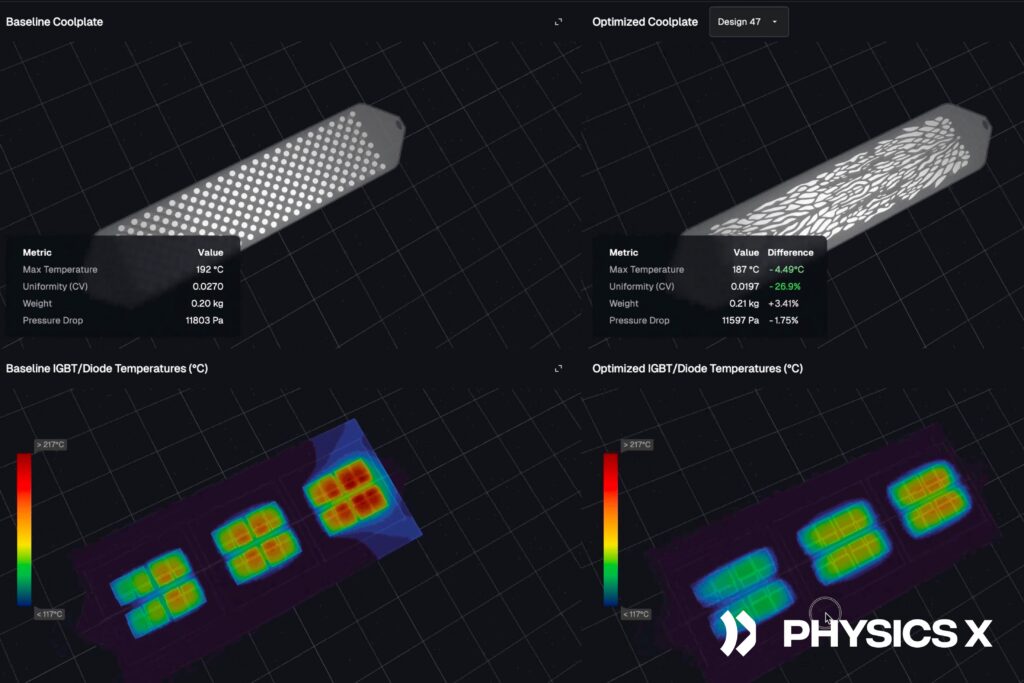
At the heart of the company’s approach is a new class of geometric and physical reasoning systems – Large Physics Models and Large Geometry Models – that can generate, evaluate, and refine designs in fractions of a second, grounded in real physics rather than scientific guesswork.
To accelerate this innovation at industrial scale, PhysicsX has built its “new engineering software stack” on Microsoft Azure, using high-performance computing, advanced AI infrastructure, and top-of-the range security to meet the demands of mission-critical engineering environments.
Engineering redefined
This shift does not stop at design.
In many industrial systems, the real challenge lies in control: how quickly engineers can understand the impact of system adjustments before acting.
Even minor parameter changes flow through a physical system in complex, sometimes unpredictable, and often delayed, ways. Traditional control methods rely on simplified models and limited foresight, forcing systems to react after they’ve changed. This means you have to fine-tune them after the event and recover after failure.
PhysicsX’s platform removes this bottleneck by embedding predictive reasoning directly into operational workflows. By predicting system behaviour at a speed limited only by compute power, engineers can evaluate thousands of potential parameter changes in parallel, and select the best course before hitting ‘go’.
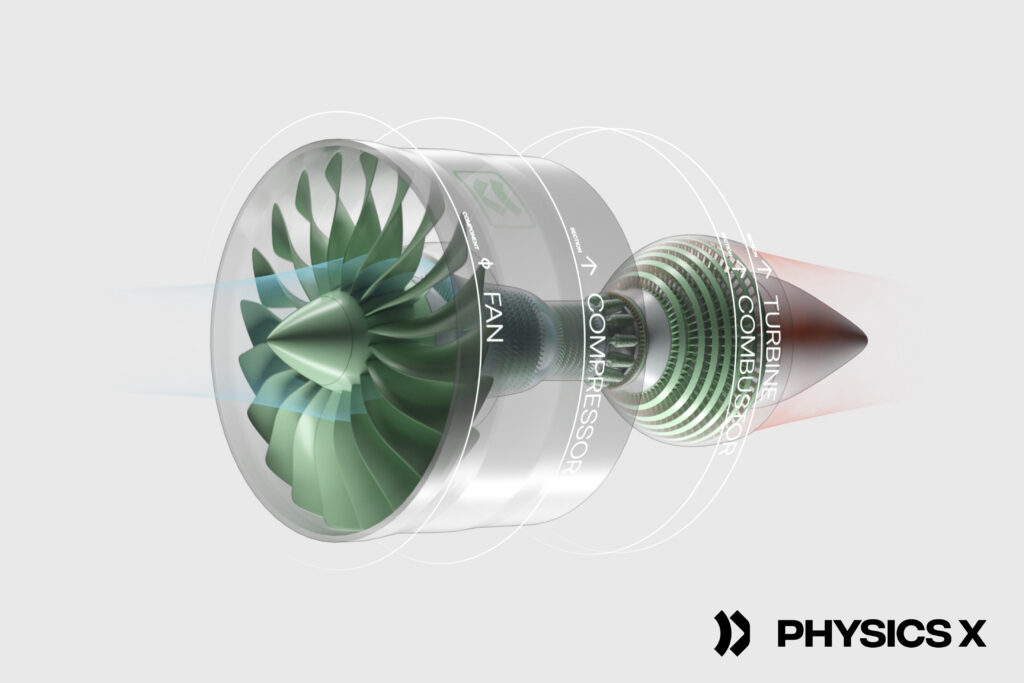
This shifts the emphasis from reactive correction to predictive control, opening up a whole new realm of possibilities for engineers. Rather than relying on static rules, systems can adapt continuously, guided by physics-grounded models that optimise performance, efficiency, reliability, and safety, even under rapidly changing conditions.
The result is not just faster response, but smarter operation: engineered systems that can be designed, controlled, and improved as coherent wholes across their full lifecycle.
Breaking silos
PhysicsX’s technology also tackles another long-standing engineering challenge: collaboration complexity.
Engineering teams are typically split into disciplines, with different specialists responsible for optimising aerodynamics, structures, and thermal behaviour, for example. Co-ordinating those disciplines can be slow and often leads to compromise.

“AI doesn’t care about those traditional engineering boundaries,” says Gómez de Segura.
“Our models can learn multiple types of physics together, so engineers can optimise a system as a whole, rather than solving one problem at the expense of another.”
This system-level perspective helps teams make better trade-offs earlier, reducing risk further along the development process, and enabling more ambitious designs, she says.
Faster impact
PhysicsX’s technology is rapidly compressing the gap between frontier research and real-world impact, helping to address global challenges where engineering performance directly affects sustainability and resilience.

“We want to bring the next 100 years of engineering progress into the next 10,” says Gómez de Segura. “This is why we’re making the most powerful physics AI both available and consumable to industrial enterprises globally.”
“This isn’t just about running calculations faster,” says Huntington. “When you improve a turbine, a mine, or a datacentre, the benefits compound for decades – and that’s the future we’re building toward.”
The company is showing how AI-native technology, built on the secure foundation of Microsoft Azure, is helping reshape the physical world for the better, faster than ever before.